Showing posts with label Eggs. Show all posts

Wednesday, April 26, 2017

Revving Up for 2017 and Beyond

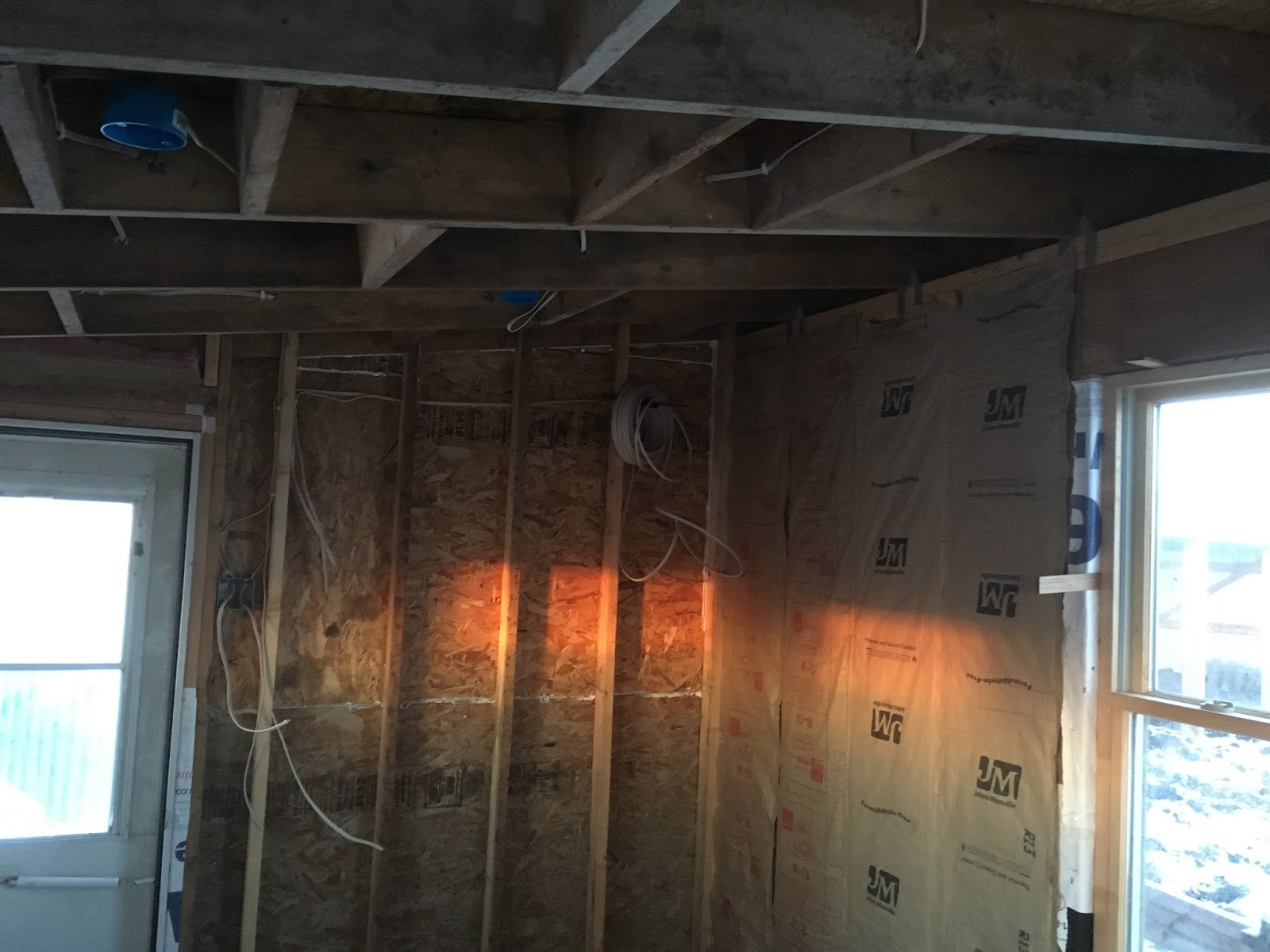
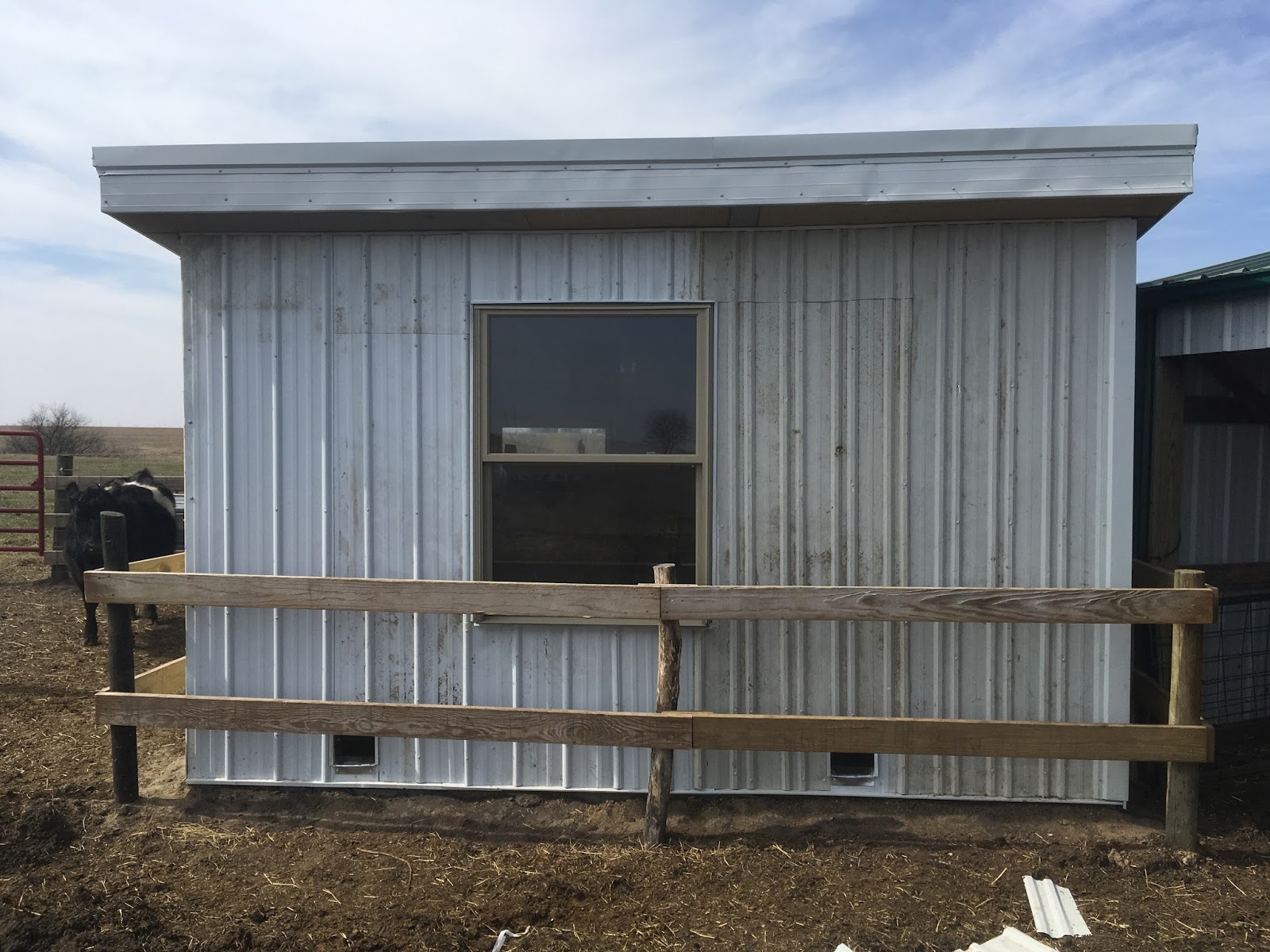
It has been way to long since my last blog post. With the mild winter, rampant sickness, tons of meetings, and Janice’s promotion, it has been very busy around here. Some of our lingering projects are almost complete. The new chicken house has been put into service despite a few finishing touches on the interior that needs completing. The building is located jetting out into the cattle winter lot, to hopefully help reduce fly levels and therefore reduce the risk of pink eye (which hit us hard in 2016).

Front of the Layer Building (recycled metal and all)

Southside of the Layer Building

Pulling 150 feet of wire through Conduit Sucks

Layers Moving In

I did get some of our frost seeding on late, but it got done. I put on a mix of 50 pounds of birdsfoot trefoil and 50 pounds of Haifa white clover. I use just a shoulder mounted bag seeder a manual spinner, so the process can take several days to get over the whole farm.

100 Pounds of Seed to Spread

Our first 2017 chicks got here two weeks ago. They are growing well and depending on the weather, should be outside in a week or two. They should be available to customers by mid-June. We are brooding in stock tanks like we have in the past, but I have constructed some smaller brooder hoods based on a design I was using on the old farm. This helps the chicks regulate their own temperature and should help avoid health issues like pneumonia. 

Checking Out the Brooder Set-up

Hamming it Up with the Chicks

They are cute when they are little

Crafted a smaller brooder hood based on the ones we used on the old farm

Other projects that are getting nudged along on the farm include some fencing and brush clearing. 
I started building a stretch of fence behind the house almost two years ago, but that got stopped when I realized I would have to put a gate in the middle of that expanse of fence because that was the best sledding site for the kids on the farm. I got the bracing for that gate finished last night, now I need to run the wires, hand the gates, and bury the connective wires. 

One Step closer to Finally Getting This Stretch of Fence Done

I did not get very much brush cut this winter, but what I did get cut still needs to be stack and burn. I started that process last night and for a few seconds that pile of brush went up like a candle. That should tell you that it is pretty dry on the farm (we have missed several good rains). 

I found a calm day to burn brush

One of the two things that have really been keeping me busy is my role as Board President of the Iowa Food Cooperative. I have been running meetings, trying to improve processes, and just trying to get everyone on the same page and pulling in the same direction. The Iowa Legislature in there 2018 fiscal year budget eliminated the Leopold Center for Sustainable Agriculture at Iowa State University.  I made a trip up to the capital to give testimony at the house budget hearing. That testimony is available here

Heading up to the Capital

I have also been increasingly involved in my local political party and parallel organizations. With that in mind, I am considering running for public office in 2018. The groundwork for these things takes quite a bit of time, focus, and energy. I will keep you posted if and when I have anything to announce. 

The kids are doing well in there respective schools. Our Daughter, is increasingly reading on her own and is still a social butterfly. Our Son, is shockingly advanced at math and has matured so much in the past year.  I am trying to get them outside more and a bit more involved in farming. Luna (the big puppy), sometimes wants to playfully chase them around a bit and at 50 pounds she can at times be intimidating. I wish both Janice and I could devote more time to the kids, but I try to make the most of what I have to work with. 

Posing Next to Flowers Planted in Memory of my Mother

Kite Flying, Early Spring Winds are Good for That


Luna keeps Growing

Hopefully it won't be so long before the next blog update. Until next time, take care and I will keep you posted about any updates here and on the Facebook page.


Thursday, February 16, 2017

Looking Back at 2016 & Looking Ahead at 2017

2017 is our tenth production season. We have come a long way in ten years and yet there are many challenges ahead. 2016 was a decent year, but not a great year. Overall sales were generally down a little over 2017. There is a national trend away from direct to farmer sales and we are not immune. We have heard of sales declines from many other local producers, to the point where I know of about a half dozen that are considering other alternatives. Our sales decline was 7% from last year, with cattle breeding stock sales helping to stabilize things. Producers who have held steady continue to offer more and more product selection and additional services. There are limits of course to what is possible, but we continue to reevaluate our product offerings. Our pricing and products page has been updated for 2017 and contains some products we have added as well as others we have left off in the past.

Starting layers back up again has been a noticeable burden on the business with start-up costs of around $2,000. (building, chickens, feed, & cartons). The chickens have not moved into their new home yet, but they are laying full bore producing at least 15 dozen a week. When eggs stopped being a regular product for us, it hurt business a lot, and I never imagined it would be three years before we would be back into that enterprise. 

House Wrap is On & Windows are In

Door is on & Exterior Steel Starts Going Up & Roof is On

Steel Going on the West Wall

Interior Insulation and Wall Sheeting Going Up

Electrical being Run

A quiet little change around the farm was the purchase of a newer truck. We purchased a 2011 Toyota Tundra because we wanted to be able to tow the tractor on the flatbed truck (Tundra is a good pulling truck), we wanted to update from the gold 1997 Chevy because she had reached 189K miles and rust has been pretty hard on her. She might stick around at least for a while because a beater 4x4 truck still has some value doing jobs you would rather spare the new truck. However, that meant that Grandpa's old blue truck 1991 had to go. I found her a good home.

New 2011 Toyota Tundra

2007 Chevy Farm Truck Gets to Stay for a While

Good Bye Blue

I would have liked to make more progress this month, but my children have been intermittently sick and have made me intermittently sick as well. They are looking better today, but neither one is back to 100% yet. 


"Daddy I Don't Feel Good"

How Two Sick Kids Share a Couch

Stay tuned as we will try to get our production schedule for 2017. When we have delivery dates figured out, we will share them with our customers. Thank you for your support and I look forward to seeing you all in 2017. 


Friday, March 11, 2016

Farm Profitability in 2015 & 2016 Plans

Sorry it has been so long since I have posted. The lack of Internet in our home has put a real damper on blog posting. 2015 went pretty good for us. Janice already posted about this already, but I think it is important to discuss. We did our taxes and posted only a $200 loss on the year. In eight years of farming, this is the closest we have come to showing a profit. Before mileage, insurance, power, and water, we made $6,000 last year, with total sales around $18,000. This is an increase over the last several years by around $4,00 to $3,500. Sales by product looks like 40% beef, 35% chicken, 25% turkey, and less than 1% eggs. We did this without any lamb sales, since we phased that product out, and with a 25 percent reduction in the number of meat chickens.

2016 Production & Delivery Schedule

Chicken production was cut back for several reasons. With the move last year, our production season got started about 4 to 6 weeks late. This cutback on the number of deliveries we would normally have done by cutting out June and the first half of July. This meant a lot less cash coming in early, and not enough cash flow to afford to raise 90 more chickens late in the season. I hope to move our chicken production back up to previous years levels. As of right now, my availability of chicken in the freezers is close to running out. Profitability on chickens went up as we started be able to offer individual cuts and I would expect us to continue to do that in the future. We may offer chicken breast as two per package instead of four, and offer chicken drumsticks at six or eight per package instead of for.

Turkeys treated us well. We had some of the best mortality rates we have had in years. I think that 50 birds may be just about right for us. We did not do Pickett Fence Creamery Thanksgiving Sample Sunday for the first time in seven years, but added turkey delivery to Farm to Folk in Ames. With the switch to GMO-free feed and subsequent price increase to cover that change, it would seem that our turkeys are just too expensive for that market to bear as we saw a massive drop off in sales there in 2014.  I have been very pleased with our smoked turkeys, since they are now sodium nitrate and nitrite free, but the big challenge has been getting the locker to let me bring them in. This has been very frustrating to me and I have customers who want his product, but I can't get the locker to do the job. Putting poultry into the lockers smoker, precludes red meats, and requires the smoker to be completely cleaned out once complete.  I will continue to work on this and look at other options.

I want to see improvements in our egg sales. We have demand for eggs, which we are not meeting. Right now we have the same old seven hens that we have had for years. The big bearer is building a new poultry structure. I am working on plans to build a nine-foot by thirteen-foot structure this spring and summer. The odd size dimensions are because that is the largest structure we could squeeze into the desired space. The building will accommodate 30 to 35 layers and will place the access doors in the cattle lot, which should help reduce fly numbers. I currently have chicks scheduled to arrive in June, which means we won’t really start to see eggs until around Christmas. The process of ramping back up on eggs is unfortunately a slow one.

Beef has finally really come on in 2015. We processed 4 animals and sold two older bred cows. We are now to the point where we are creating a pipeline that will let us process four animals a year, and sell a small amount of breeding stock each year. I am looking at selling off at least two young heifers this year to keep out cattle numbers inline with our available forage.

Calf Born Today

Calf Born Five Days Ago

Part of profitability is also watching costs. We spent too much on hay this year, having to stop grazing and feed hay in the summer is killer. In the short term, I have been clearing brush and “weedy” trees from the pastures and broadcasting clover seed on the pastures in an attempt to frost seed. It has been very warm here this spring and we have not been seeing freezing temperatures at night in March, which is unusual. In the longer term, I am looking at the possibility of trying to “reclaim pasture ground” across the road from me that is so badly overgrown with “weed” trees that some locals call it the “Jungle.” I am still searching for cheaper ways to get the protein side of our GMO-free poultry ration, but I have yet to find something that I am confident will no reduce product quality. I would love to be able to reduce the price on our poultry and I will keep looking for a solution.
I am exited that the house construction is largely behind us and that we get to start a year on our new farm. I want to try to improve our communication with our customers. This has definitely suffered with the move, the uncertainty, and lack of reliable Internet at home. I am excited to see all of you again and wish you all a happy spring.


One of ManyBrush Piles Cleared This Winter

Post Burn

Sunday, June 1, 2014

Non-GMO Conversion

We polled customers this spring and they said overwhelmingly that having a non-genetically modified (non-GMO) ration for the poultry was very important to them. We listened to your feedback and talked with the farmers that mix our feed and together we set out to build a ration that is free of GMOs (the most common GMO soybean is also known as Roundup Ready).


Customer Survey Results

Until this year, our ratio has been primarily composed of open pollinated non-GMO corn and purchased soybean meal. Although it is possible to buy non-GMO soybeans, it is much much harder to find non-GMO soybean meal. The real problem with soybeans is that you can't just throw them into a grinder-mixer, you have to roast them. Soybeans have to be heated to break down enzymes that make it hard for mono gastric stomachs (Chickens, Turkeys, Pigs, Humans) to absorb the protein in them. This roasting process is usually done at very large facilities and creates a system where farmers sell their beans on the open market and buy back this generic roasted product. In the US, 85 percent of of soybeans are GMO, so it is easy to see that most of the soybeans in the purchased meal was likely GMO.


Chickens on Pasture in Recently Constructed Pen

To get around this, we will be using soybean meal that is made from food grade soybeans for human consumption. There was an exhaustive search done to investigate where a roasted non-GMO soybean product could be located and that list was very very short. The resulting change is not a cheap one. Generic soybean meal used to run $450 per ton and the non-GMO version comes in at over $1000 a ton. In other words, our feed has gone from $0.20 per pound to $0.33 per pound.  Our birds are eating right around four pounds of feed per pound of gain, resulting in a cost increase to produce the birds of $0.52 per pound. With high chick prices and a bump in locker fees, we must raises prices to try and preserve the small margin that already exists on our birds.

The change resulted in a $.60 rise in chickens per pound, a $0.50 rise in turkeys per pound. Our eggs have been sold at a loss for over a two years now, so we moved to correct the price and roll in the added feed cost with a $1.00 increase per dozen eggs.

Whole chicken: $3.90/lb
Cut up chicken: $4.10/lb
Large eggs: $4.50/doz ($4.00/doz with return of our clean container)
Medium eggs: $4.00/doz ($3.50/doz with return of our clean container)
Whole turkeys: $4.25/lb
Smoked turkey halves: $7.00/lb

Cattle and lamb prices will not change, as their diet is already GMO free and they do not eat grain. Demand for lamb has been very soft and we are strongly considering phasing out lamb over the year. 

Despite what the customers and my wife were telling me, I must admit that I am terrified by this price change. It is a massive shock to our system financially on the front-end of this process. I can understand that some customers might want to retract their orders. They are welcome to do that, and I would not hold that against them. As I see it, this is a leap of faith. We are taking the first step. 

Tuesday, January 7, 2014

Confronting the Cold

It has been all over the news, but we have had some of the coldest weather I can really remember and certainly the coldest temperatures and windchill since I started farming. On Monday, the  high temperature was -3 F and the low was -14 F with wind chills driving temperatures to around -50. We just got back from vacation Sunday night late and the temperatures were an unpleasant surprise to come home to. They even canceled my daughter's preschool on account of the cold Monday and Tuesday.

When I got home the cows had broken through a temperate fence and hunkered down in and around the hay bales for cover. After two very tight flights hauling kids through the airport as fast as we could go, I did not have the energy to extract the cattle from the hay bales and get them more shelter that night. Luckily, I had moved the sheep inside the building before I left for vacation in preparation for lambing in a few weeks. The building was a whopping 10 degrees Monday morning, still more then 20 degrees warmer then outside. Luckily, sheep chores did not get more difficult because of the cold weather.

Sheep inside our farm building

The chickens require a little more attention in this weather. This is the first time since I built the new building that I had to break thick ice on the unheated chicken water buckets. I am also collecting eggs twice per day so we limit the likelihood of having eggs freeze. Since we use roll away nesting boxes, where the eggs roll forward away from the hen to a collection grove, the hens are not usually sitting on the eggs to keeping them warm. 

Frozen chicken waters

Chickens that are happy to drink again

The cows proved the most challenging to deal with and are most of why I spent three hours outside Monday choring. The first thing I did, was to get the cattle a new bale of hay. So, I rolled a bale down the hill and pushed it over on its side before cutting the bale wrap off and putting the bale ring around it. The bale they we eating on before they broke into the hay was 3/4 gone and was quite exposed to the wind. I then had to pop some sheep net out of the ground using a hammer and pry bar so the cattle could get back to their water and also make use of the outside sheep shelters, since the sheep were inside the building. 

Cattle moved to the south side of the building

Cattle in a more sheltered place

Cattle now making use of the outside sheep shelters


 Then I had to cut the cattle off from getting into my bales of hay. I started by setting up some temporary posts and running a temporary fence line. I had to take a cordless drill and make holes in the ground for each of the half dozen posts.

Temporary electric fence posts put in with the aid of a cordless drill

 I also had to open the cattle water. I love my Cobett waterer, but that was the worst ice I had ever seen on the thing. It was 4 inches thick where the cattle last drank from it and 6 inches on the other side of the waterer. It took several minutes of work with the hammer and pry bar, but I got it open and then the cows, who were impatiently waiting for me, started drinking.


Thick ice on the Cobett cattle water


The cows swarm the Cobett once the ice is off

Lastly, I had to deal with the little things that happen when you move livestock into an area you don't usually have them. I had to reconnect that section of fence to my electrified fence because I had cut the supply line a year or two back for some forgotten reason. The I found that several calves decided to escape through a gap in the the wood fence that I had always intended to close off. So, that project got completed  and the calves got rounded up and returned to the pasture, but not before I chased them around the house yard far longer then I would have liked given the temperature.

Former small gap in the fence that the calves decided to exploit


All and all it is good to be home. It is hard traveling with children and it is nice to work on getting them back into a routine. I think my Son is the happiest to be home since he is not nearly as outgoing as his sister. It could also be that he was tired of ridding around in the back seat of a mini van with his father for several days. 
Watching Daddy int he back of the mini van

I am looking forward to preschool opening up again and life retuning to normal,  but Hazel and I did enjoy a morning of playing with Duplo blocks together.  I will keep you posted as the weather moderates and I get a chance to tackle some farm projects that could use my attention. 

Showing Daddy the rolling Duplo tower


Monday, November 30, 2009

Ramping Up Egg Production


We have been getting around one-and-a-half dozen to three dozen eggs a day. Assuming an average of two dozen per day, we get 28 dozen per week, so around 112 dozen eggs each month. Local demand is around 9 dozen per week. That means we have have more supply then demand by about 76 dozen per month. We need another outlet to unload supply. We sell through the Iowa Food Cooperative, but in order to sell eggs through them, I need to have an egg handlers license from the State of Iowa.
This process requires me to submit an application, and pass inspection. In order to have inspection I have to have certain supplies and go through some laid out procedures. I just dropped $250 on more supplies, license applications, to be able to pass inspection and handle our current egg output. We have had to get an egg candler and we will have to inspect every egg to make sure it is not developing (it should not if harvested promptly), a special wash solution must be used that is 5 percent chlorine, and an egg scale has been purchased to prove that I can grade eggs. I also ordered 500 cartons. They are sitting in the middle of my living in a huge box waiting to be unloaded.

Thursday, October 29, 2009

More & New Products Coming

e

I am always trying to push the envelope a little bit so I can be ahead of other producers. I want to have unique products that help differentiate our business and keep people coming back. On Tuesday this week I went over to the Milo locker and brought them 10 of our turkeys that I had processed two weeks ago. They will be smoked and sliced in half and will be ready for Thanksgiving. They will be $6.25 per pound and will likely run 6 to 9 pounds per half. Milo locker has won several state wide awards for their smoked turkey so soon you will be able to get our pasture raised turkeys with Milo's great smoking experience. Once major advantage is these birds will not have to be cooked for serving, just heated as they will be a precooked product.

As an accidental quark of the bad weather (cold wet weather=slow/no weight gain), we have some very small chickens for sale. If you have been wanting small chickens around 2.1 to 2.9 pounds we have them. As usual, I was very impressed with how they dressed out, despite there petite size. If you want very meaty tiny birds, drop us an email.

One major stumbling has been that we have struggled to keep our eggs in stock for just our most local customers. Now, we finally have enough layers up and running that we can offer them our wider customer base. $2.50 a dozen large, and $2.00 a dozen medium. The picture above is one of our recent days collections of eggs recently.

Lamb will be a major new product next year. I have purchased a ram this past Saturday when I was out there helping Galen Bontrager (www.galenbontragerfarm.com) process some of his pasture raised turkeys. I would have some pictures for you, but the but the big boy is being rented out right now by another farm in our area. He is a big ram, weighing around 350 pounds and is 100% registered Katahdin with RR traits. The RR traits breed Scrapies resistance into a flock of sheep. Scrapies is a neurological wasting disease, not too unlike "mad-cow disease". I am not worried about Scapies in my flock, but it is a way to add value to ewe lambs that might be sold as breeding stock in the future.

Anyway, this ram is 4 years old and has some beautiful lambs on the ground at his earlier home. I will get him back around Thanksgiving time or just a little after that and we will begin breeding with a target lambing date of mid-May. We should have lamb for sale for customers as whole and half animals, as well as retail cuts by late 2010.

I also picked-up a steer calf two weeks ago and so we will be experimenting with grass-finished cattle this year. There will be a very limited amount of beef available late next fall either as half or quarter animal.

Sunday, August 2, 2009

Quick Update


I have not kept up with the pace of the posts as promised. Since the tractor has arrived, I have not done much with it. I am still working through things like the fluid levels, adjusting the brakes, and replacing the exhaust. It is going to be just a little bit before those things get squared away.

We have had a lot of trouble with our first batch of turkeys this year. The second batch arrived on July 22nd and has come along much better. We have just lost a handful of chicks and they continue to grow. We have about a week and a half left of the critical stage and then another two weeks where they need only moderate babying. After that, they are off to the races. The surviving 26 turkeys from the first batch of 74 turkeys are outside and doing pretty good. I have two birds in that group that still have poor legs, but they have improved considerably since going outside. I have included a picture of this batch. I do love turkeys for their social behaviors and their outgoing and curious personalities, but I will admit that this first batch was quite trying.

Our other birds look good. We continue to struggle with low egg production in relation to demand. We are working on it, the girls can't grow any faster. We have spring laying hens started in mid-May outside in a chicken tractor (portable pen with an open bottom) and they look great. I have included a few pictures of the ladies for your viewing pleasure. I have been working on my last consulting work in the pipeline and will then be able to swing my attention back to farm items (fence building, building repairs, tractor, updating business books, and some customer correspondence). I have been reading Comeback Farms, a birthday gift from my father-in-law, by Greg Judy. I have got to see this man's farming operation. Greg has me even more focused on growing out my sheep herd and looking toward the acquisition of some cattle along with doing custom grazing. We did put a deposit on an RR trait 100% Katahdin ram lamb. The RR trait is important because it allows me to bread to a Scrapie resistant flock. I got the ram from Sharon Krause in Booneville, IA. She has a very beautiful farm and a very nice looking flock of sheep. She has several other RR trait rams available that I would encourage and producer to investigate. That should bring you up to speed and I will try to keep in touch soon.